
Internal Podcasting
The Internal Podcast Platform
For Your Whole Company.
Internal podcasting is the private counterpart to public corporate podcasts: the same production quality, gated for your workforce only. Higher attention than newsletters, easier to consume than town halls, and the only format built for the half of your company that doesn't sit at a desk.
Inside the Company - Episode 12
Hypecast · Private feed
Distributed inside Teams, Viva Engage & the employee app.
Gated by SSO. No public link, no third-party app. Your workforce only.

Every episode, recapped.
Auto-generated mail your employees actually open.
78% finish rate
vs 25% mail open avg.
3.4×
attention
Trusted by Leading Enterprises


What internal podcasting is
Internal Podcasting
Vs. Public Corporate Podcasts.
Internal podcasting is the practice of producing audio and video shows for a company's own workforce. Unlike public corporate podcasts - which enterprises publish to Apple Podcasts, Spotify, and YouTube for customers, prospects, and the wider market - internal podcasting is gated. Episodes flow through private feeds, secure intranet integrations, mobile apps, or password-protected players, so the content stays inside the organization.
Internal podcasting is also known as internal company podcasts, employee podcasts, or internal communications podcasts. The format ranges from a five-minute weekly leadership update to a fully produced series on culture, strategy, or training. The defining characteristic is access: the audience is your workforce, and only your workforce - the opposite of a public corporate podcast built for reach.
Enterprises use internal podcasting for leadership and CEO updates, strategy and change communications, frontline and field enablement, onboarding, learning, and culture. Many of the same companies also run public corporate podcasts for external thought leadership - the two channels reinforce each other. Run on the right platform, internal podcasting becomes the most measurable and best-attended channel in the internal-comms stack, with listen-through rates several times higher than email open rates.
80%
of the global workforce is deskless. Newsletters and intranets don't reach them. Audio does.

25%
avg. email open rate
The Channels You Have
Aren't Reaching Everyone.
Emails get skimmed
Average corporate email open rates sit around 25%. Click-throughs are in single digits. The most important update of the quarter often gets thirty seconds of attention.
Town halls get missed
Live formats only reach the people who can clear their calendar - and replays go unwatched. Frontline shifts and global time zones make synchronous comms structurally broken.
Frontline is unreachable
Around 80% of the global workforce is deskless. They don't open intranet articles. They share devices. Newsletters are written for an audience they aren't in.
Leaders feel distant
Polished written messages strip out the things that make leadership land - voice, pause, conviction. The CEO email reads like the CEO email.
Hybrid disconnect
Remote and in-office teams drift into separate companies. The watercooler context that aligned them in the past doesn't exist anymore.
No way to measure
Most internal channels report sent-volume, not landed-attention. You can't improve what you can't see.
What Internal Podcasting
Actually Does.
From leadership messages to frontline reach, training, and culture - internal podcasting is one channel that flexes across the whole internal-comms job, and pairs naturally with a public corporate podcast for external reach.
Leadership Updates
Monthly "what matters / what changes / what's next" from the CEO. Voice carries the things text strips out.
Strategy & Change
Restructures, M&A, transformation programs. The moments where rumor fills the gap if leadership isn't audible.
Frontline & Field
Mobile-first audio that works on a phone, in a van, on a factory floor - exactly where newsletters fail.
Onboarding & Culture
Evergreen content new hires can binge. The texture the handbook never carries.
Training & Enablement
Audio-first learning embedded in your LMS. Sales, compliance, product - content people consume between meetings.
Employer Branding (Internal)
What your existing employees forget about the company, surfaced by the people living it. A reason to stay, told well.

78%
avg. listen-through
78%
listen-through rate on internal podcasts run on Hypecast. Multiples higher than email open rates.
Internal Podcasting Platform
Everything Internal Podcasting Needs.
In One Platform.
Studio-grade recording
Record like a video call. Get podcast-quality results. Separate, lossless audio and video tracks for every guest.
Transcript-based editing
Edit audio by editing text. No technical skills required.
Private distribution
Target specific teams, business units, or the full organization. SSO, role-based access, geo-fencing built in.
Mobile-first listening
Native apps for iOS and Android. Frontline-friendly. Works on shared and personal devices.
Enterprise analytics
Listen-through, completion, retention curves, dropout points. The metrics internal comms has always wanted.
Intranet integrations
Microsoft Teams, Viva Engage, SharePoint, Slack, Staffbase, Haiilo, Unily, and major LMS systems.
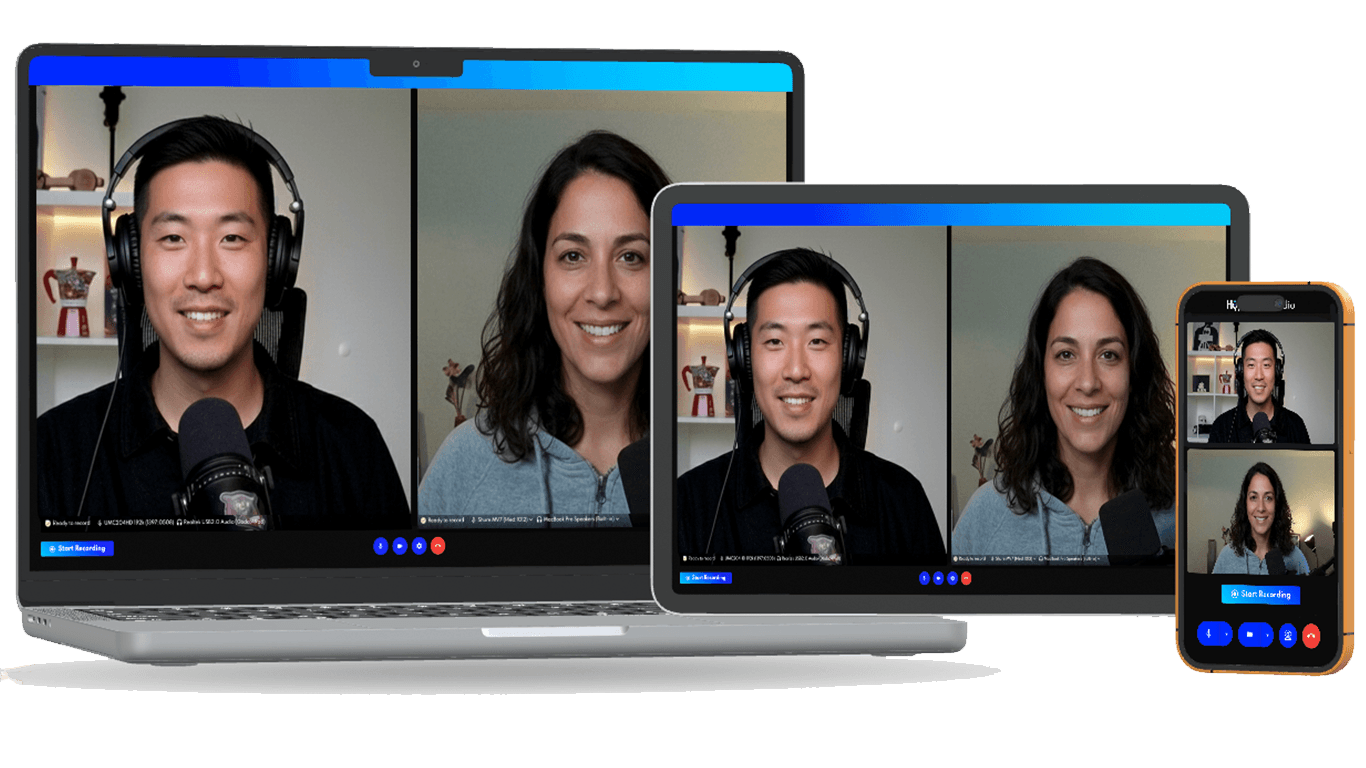
One recording.
Every channel your employees use.
Record once, then automatically generate the formats every internal channel needs.

Podcast Episode
Full audio for deep listening
Video Clips
Short-form for intranet and Teams

Behind the Mic: Our CEO's Vision for the Future
Discover the insights and inspiration driving our company forward in this exclusive interview...
Blog Post
Text version for accessibility and search
AI Summaries
Key takeaways in seconds
Plus vertical Promo Clips for internal social.
Comparing options? Podcast hosting tool vs enterprise podcast platform.
For US & Canada Teams
Built For North American
Internal Communications.
Hypecast is used by internal comms and HR teams across the United States and Canada to reach distributed offices, retail floors, warehouses, and field crews - from Seattle to Toronto, Dallas to Montreal.
Why Hypecast
Built for Enterprise
Internal Communications.
Internal Podcasting, Corporate Podcasts,
or Branded?
Internal podcasting, corporate podcasts, and branded podcasts often get confused. The simplest distinction is who listens - and whether it's gated.
Internal Podcast
This page
Private. Internal podcasting for your employees only. Used for leadership, culture, training, and frontline reach.
Corporate Podcast
Public. Corporate podcasts target your industry, customers, and talent market. Used for executive thought leadership and credibility - the external counterpart to internal podcasting.
Branded Podcast
Public. Audience is broader - built around a topic the audience would choose, not the brand. Used for brand awareness and content marketing.
Examples
Internal Podcasting At
Global Enterprises.
Real internal podcasting programs running on Hypecast - across pharma, energy, and retail. Many of the same companies also produce public corporate podcasts for external audiences.
Incyte
Global biopharma running an internal podcast across R&D, commercial, and operations - used to land strategy and culture in a heavily regulated, multi-site organization.
Read the case studyE.ON
One of Europe's largest energy companies using internal podcasts to reach a workforce split between corporate offices and the field - leadership updates that actually travel.
Read the case studySamsung
Audio-first retail training rolled out across stores in EMEA. The episodes ride alongside campaigns and product launches, replacing PDF decks no one read.
Read the case studyFrequently Asked
Questions.
Ready to launch internal podcasting
that actually get consumed?
We'll show you how to launch an internal podcasting program employees trust - and how it fits alongside a public corporate podcast strategy.